PRODUCT IMPROVEMENT —
Electronic Check Valve and Mounting Bracket Added to the TOUGH GUN TT3 Reamer
August 11, 2014

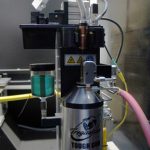
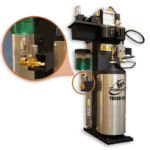
An electronic check valve and mounting bracket have been added to the TOUGH GUN® TT3 reamer. This improvement provides added protection against leakage from the sprayer reservoir.
Since this addition affects the wiring slightly, updated wiring diagram instructions are provided with every affected unit.
A TOUGH GUN TT3 reamer sprayer valve retrofit kit (part #TT3-500R) is available for units manufactured prior to August 11, 2014.
How Do I Know If I Need to Retrofit My Reamer?
If your TOUGH GUN TT3 reamer:
- has a spray head that pools or leaks anti-spatter once the system is primed;
- has an elevated multi-feed / bulkfeed source (drum / pail located on top of the mezzanine);
- is mounted on an angle (baseplate is not parallel with the floor);
you will require the TOUGH GUN TT3 reamer sprayer valve retrofit kit #TT3-500R to fix any issues that you may be experiencing. Installation of this kit should take approximately 15 minutes.
Click here for complete step by step installation instructions.
Whether it’s in a small fabrication shop or a large manufacturing facility, investing in a robotic welding system is no minor expense. In many cases, the welding assigned to a robotic cell could also be performed in a semi-automatic or manual welding cell. However, it’s the potential advantages of the system — greater productivity, higher quality, better consistency and more cost savings — that make the purchase of a robotic welding system such an attractive option. Obtaining those results isn’t a matter of chance. At the end of the day, the robotic system needs to be able to produce more parts at an equal or higher quality and accuracy than a human operator. It’s the job of the robotic welding supervisor to make sure that happens. To achieve success in a robotic welding application, there are several key factors a robotic welding supervisor — especially one new to the task — must consider. Specifically, he or she must be able to understand the robotic system thoroughly, establish an effective documentation and maintenance routine, and look for ways to improve performance on an ongoing basis. In many cases, that may also mean enlisting the expertise of resources both inside and outside the company. Understanding the robotic system might seem like an obvious requirement for a robotic welding supervisor. With all of the administrative and operational duties that often accompany the role, however, it can be easy to simply delegate portions of the daily operation of the robotic welding system to shop floor personnel and/or the maintenance staff instead. That tendency, unfortunately, could lead to pitfalls by distancing the robotic welding supervisor from the ins and outs of the robotic welding operation. For example, the robotic welding supervisor doesn’t necessarily need to be able to troubleshoot a circuit board malfunction or rewrite the welding program, but it’s important that this individual has a solid knowledge about these components, so if an issue arises he or she can quickly recognize that there is a problem and alert the appropriate personnel to rectify it. The robotic welding supervisor should also know how the components in a robotic welding system — the robotic GMAW (gas metal arc welding) gun, consumables and cables, to mention a few — relate to each other and the impact they have on weld quality and productivity. Again, having this knowledge makes it easier to identify a potential problem and seek out the best solution. Gaining robotic welding success depends in part on establishing a rigorous documentation, maintenance and control system. When problems arise, as they undoubtedly will, they never occur without a cause. The best way to start the troubleshooting process is to look back to the last thing that was changed in the welding process — or should have been changed, but was not. Keeping an accurate and detailed log of everyone who enters the robotic welding cell is key. There should be documentation of everything personnel cleaned, changed or replaced in the cell, including adding new contact tips or other consumables, changing drive rolls or transferring a new drum of wire into the robotic weld cell. This record can help in identifying the source of a problem and getting the system back up and running with as little downtime as possible. Without such documentation, maintenance personnel could spend hours looking for the source of the issue, when in reality, they may only need a few minutes to rectify the situation. Keeping a log of activities within the robotic welding cell will also assist the supervisor in establishing an effective predictive maintenance schedule, which is the best way to keep unexpected downtime occurrences to a minimum. An activity log can help predict when a gun cable liner will fail, for example, so that maintenance personnel can prevent unplanned downtime and quality problems by changing the liner beforehand. Keeping traffic in and out of the robotic welding cell to a minimum is also important to reducing change within the operation and keeping documentation accurate. The more people coming and going from the cell, the more difficult it becomes to monitor and record activities that could affect the performance of the robot. Getting the robotic system running at peak capacity and providing an acceptable return on investment is just the beginning of establishing an effective robotic welding operation. From there, the robotic welding supervisor should look for ways to optimize and improve the robotic welding operation on a continual basis. A robotic welding cell might be running well enough to meet its daily production demands, but finding ways to improve its performance even more can bring significant advantages to a company. For example, creating greater efficiencies within the system can free up extra capacity that could be used to produce a product from somewhere else in the shop. Also, it’s important not to settle for “good enough” in the robotic welding operations. Accepting suboptimal circumstances — for instance, that a robotic GMAW gun cable is rubbing on the robot arm and must be replaced every two months or that every two hours the operator must adjust welding parameters to accommodate consumable wear — can hinder the efficiencies sought in automation in the first place. A robotic welding supervisor should never consider these types of activities as inherent to the production process, but rather seek out ways to rectify them in the name of continuous improvement. After all, a company that continues investing in robotic welding — compared to one who simply accepts and compensates for problems — stands a greater chance of gainining higher productivity and profitability, not to mention a competitive edge. To achieve the goal of continual improvement and optimization of the robotic welding operation, the supervisor should also know the resources available to him or her, both internally and externally. Internally, everyone from the daily robot operator and the quality technician to the engineering staff and the sales team should be communicating with each other to help improve the existing robotic system. These team members can also play a vital role in helping identify the company’s future robotic welding needs. The daily robot operators — those who load and unload parts and interact with the tooling — often know the specific robot and its idiosyncrasies better than anyone on the shop floor. As a result, they are often in the best position to alert the robotic welding supervisor about potential or existing problems. They may, for instance, notice that certain joint configurations or positions tend to result in excessive spatter, resulting in unnecessary post-weld clean up. By maintaining open communication with these individuals, the robotic welding supervisor can then employ the proper resources to rectify the problem. Quality technicians can be another source of valuable information to help the robotic welding supervisor improve the performance of the operation. Quality technicians might notice that welds in a certain area of a part are regularly oversized. The supervisor can then take this information to engineering, which in turn can look for solutions to revise the weld sequence or identify different system components that could further improve productivity and cost savings for the robotic welding system. Alternatively, an external resource, such as a robotic welding integrator or equipment manufacturer, can often offer insight and expertise gleaned from working with the robotic welding operations at other manufacturers. This knowledge can help companies to not only address issues within the robotic welding system, but it can also put these individuals in a position to offer advice that will make the operation run more efficiently. In this respect, the robotic welding supervisor should take the role of a communicator. He or she will be the one who understands and gathers the information from the resources available, as well as facilitating the conversations necessary to improve and optimize the robotic welding operation. Being responsible for the bottom line success of a robotic welding operation can be a daunting task. It requires a breadth of technical and business experience as well as strong people skills. Plus, as technology continually improves and evolves, the robotic welding supervisor must keep focused on improvement and optimization. They must also maintain open communication with resources both inside and outside of the facility. For those up to the challenge, however, the potential for a robotic welding system to improve quality, productivity and a company’s ultimate success is immeasurable. When 90 percent of your business focuses on boat fabrication and repairs that require you to meet specific deadlines and codes, having the right welding equipment to manage the job isn’t just ideal, it’s essential. The welding operators and supervisors at Hike Metal Products Ltd. are no strangers to this fact. They know that the equipment they use needs to produce quality results, and it has to be easy to maintain. Downtime for weld repairs or MIG gun and consumable replacements simply isn’t an option. “We’re pretty well-known worldwide in the boat building industry for the quality of the vessels we build,” explains Frank Baptista, plant manager, Hike Metal Products. “We can relate that back to the equipment we use to make our boats.” The boats to which Baptista refers include those for the Canadian Coast Guard, the popular Maid of the Mist at Niagara Falls and police boats throughout Abu Dhabi. They have also fabricated boats for areas ranging from Florida to California and Venezuela, and recently finished an $8.5 million fireboat for the Chicago Fire Department. Hike Metal Products also tackles tough fabrication and repairs for other non-marine applications ranging from water treatment plants and oil recovery to agriculture. For the last several years, Hike Metal Products has relied on Bernard T-Gun™ Semi-Automatic Air-Cooled MIG Guns (formerly Tregaskiss TOUGH GUN™ Semi-Automatic Air-Cooled MIG Guns) and TOUGH LOCK™ Consumables to meet the quality and productivity goals on its marine applications in particular. Local welding distributor, Ron Latrielle of Praxair in Chatham, Ontario introduced the products to the company. Praxair has worked with Hike Metal Products for the last 20 years, providing their welding supervisors and operators with new solutions to help them improve their welding performance and keep their competitive edge. Also involved with Hike Metal Products and their equipment is Kevin Cole, a representative from Bernard sister company, Miller Electric Mfg. Co. Along with Latrielle, Cole introduced the company to Miller XMT® 350 Multi-Process Inverters and Suitcase RC wire feeders that they have paired with their T-Gun MIG Guns to gain greater remote access to projects. Hike Metal Products, located in Wheatley, Ontario, Canada, has been serving the boat industry since 1958, designing and fabricating ferries, research vessels and patrol boats, as well as hovercrafts and icebreakers. The commission for the recent Chicago Fire Department fireboat arose, in part, from the company’s successful completion of a similar boat for the city of Baltimore, along with the company’s industry-wide reputation for quality and punctuality. Completing such a massive project, however, was no easy task. Nor was it a leisurely one. Hike Metal Products completed the job — from the day they received the raw materials for the project until they delivered the final product — in 16 months. It’s an impressive feat when you consider the fireboat is 90 feet long and capable of pumping 14,000 gallons of water a minute. It’s among the largest boats the company has fabricated and delivered in recent years. It also has a special name: the Christopher Wheatley, named in honor of a Chicago firefighter who died in the line of duty in 2010. As with most of the company’s projects, this one required welding thick portions of mild steel (up to 3/4 inch) using flux-cored wire and relatively high amperages (up to 400 amps) — often for long periods of time. The company used 1/16-inch welding wire and completed all welds to code according to the Canadian Welding Bureau (CWB). According to Latrielle, such applications very often require a water-cooled MIG gun in order to withstand the heat; however, he was able to outfit Hike Metal Products with 400-amp air-cooled models of the T-Gun MIG Gun instead — with no problems of overheating. That’s important considering that welding operators at Hike Metal Products can weld up to 60 feet of welds in a single day. “We were really pleased that we could get away with not using a water-cooled system, which just has more parts and more things to go wrong with it,” explains Latrielle. “The air-cooled T-Gun MIG Guns have been able to handle the amperage that they are pushing and get the job done.” Baptista adds that the previous MIG guns he and his team used couldn’t boast the same durability. “Because of the heat we weld with, the triggers on our old guns just wouldn’t last. We had to change them every other week,” he says. “Now if something goes wrong with our T-Gun MIG Guns, it’s almost time to change the entire gun anyway.” In addition to their durable triggers, the T-Gun MIG Guns feature a sturdy cable strain relief on the front and back ends to prevent kinking and abrasion. This feature also helps minimize the time and cost for cable replacement. The guns have the Double-Life MIG Gun System, as well: identical connections on the front and back ends. When the front end or cable becomes worn, welding operators at Hike Metal Products can double the life of their gun by removing the trigger switch and gooseneck and flip-flopping them to the back end. The guns also feature a Lifetime Warranty on handles and switches. If either component breaks, Bernard will replace them for free. “The features on the 400-amp gun are just so durable that the guns just go and go and go,” says Baptista. “That’s good, because if you’re not fixing the gun, you’re welding, right?” Hike Metal Products Quality Manager Dave Hewstone, along with Latrielle, like too that the guns have simplified the process of searching for welding equipment and maintaining inventory. The guys (welding operators) like them and they do such a good job, I don’t have to be out there looking for another product to meet the challenges of our projects all the time. What I like is that the guns perform for my customers. They do the job. We don’t hear a lot of complaints Adding to their arsenal of welding equipment is the TOUGH LOCK Consumable System that Latrielle introduced along with the Bernard T-Gun MIG Gun. This consumable system consists of TOUGH LOCK Contact Tips and Retaining Heads with Dual Taper Technology, a second rear taper between the gooseneck and the contact tip that helps improve electrical conductivity and extend the life of the TOUGH LOCK consumables. It’s a benefit that Baptista has noticed firsthand. “With our previous consumables, we changed out our contact tips anywhere from three to four times a day,” he says. “Now, in the morning, we just get rid of the old tip and put in a new one.” These contact tips also feature a dual-lead thread design that allows the tips to be rotated 180 degrees to create a new wear position and extend the tip life even further. According to Hewstone, Hike Metal Products has enjoyed a 25 percent increase in its productivity since converting to the Bernard T-Gun MIG Gun and TOUGH LOCK Consumable System. That productivity increase has resulted from the company reducing downtime for MIG gun maintenance and consumable changeover. And, jokes Hewstone, the productivity also comes from the company’s top-secret planning and fabrication. “No, really, there are no real top secrets to our success,” Hewstone says. “Just hard work, to be honest with you.”
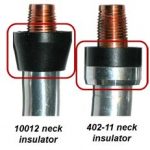
Although no new neck insulators are being introduced due to implementation of the BTB semi-automatic air-cooled MIG gun platform on June 2, 2014, users should be aware that neck insulator replacement for these guns will be based on several variables including: Please use the following chart when selecting the appropriate replacement neck insulator:
New BTB platform MIG guns, launching on June 2, 2014, will feature a common straight rear strain relief (shown right) on almost all configurations. This straight rear strain relief was originally introduced on Tregaskiss TOUGH GUN semi-automatic MIG guns and allows expansion or maintenance of several key features: Only BTB platform guns configured with Bernard or Euro power pins will incorporate the black clamshell rear strain relief originally introduced on Bernard Q-Gun and S-Gun MIG Guns. This rear strain relief is also now covered by the same Lifetime Warranty offered on the straight rear strain relief (above) for BTB platform guns. Please note the following liner compatibility:
Please note that not all Bernard necks will have this new dual thread. Necks that will NOT have the new dual thread include: There is a subtle difference to the appearance of the threads on the necks as shown below: Please click here for more details on necks offered through the BTB MIG gun platform. The Bernard necks spec sheet can be downloaded in PDF format by clicking here.
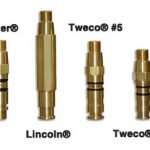
Beginning on June 2, 2014, Bernard’s new BTB MIG gun platform brings our Q-Gun™, S-Gun™ and T-Gun™ MIG Guns into a single gun line and single configurator. To combine the gun lines, it was necessary to standardize the back ends of all BTB MIG guns with the straight rear strain relief found on Bernard® T-Gun™ MIG guns (formerly Tregaskiss® TOUGH GUN® semi-automatic MIG guns). Similarly, the Tregaskiss power pins that mate with the T-Gun series have now been adopted with some slight modifications as the Bernard power pins for both Bernard semi-automatic and Tregaskiss robotic MIG guns. The slight modifications include a new overall hex shape (see image on right) and fixed gas barbs. Bernard MIG gun lines that are compatible with these pins include: Due to the expanded compatibility of these pins, some distributors and end users will be able to reduce inventories of Bernard replacement parts. For additional information on power pin kits and power pins, please click here to access the spec sheets in PDF format.
Launched on June 2, 2014, the new Bernard® conventional liners are compatible with all legacy Q-Gun™, S-Gun™ and T-Gun™ MIG guns and all BTB platform guns, which allows you to simplify and reduce your inventory. The image to the right shows how the previous liner locks were merged in the design of the new Bernard conventional liner to maximize backwards compatibility. Due to this customer-friendly backwards compatibility, the part numbers below supersede previous Bernard conventional liner part numbers. Made of high carbon music wire for smooth wire feed and long life, Bernard conventional liners are available in lengths of up to 25 feet (7.6 m) and are color coded for your convenience to indicate a variety of wire sizes. Please see the chart below for part numbers, wire sizes, and color coding information: *Standard Liner for 0.035″-0.045″ Guns NOTE: Tregaskiss conventional liner numbers will continue to be offered due to their continued use in Tregaskiss robotic MIG guns.
B Series Small Curved Handle B Series Large Curved Handle O Series Small Curved Handle O Series Large Curved Handle T Series Small Straight Handle T Series Large Straight Handle C Series Straight Handle Please note that all handle and trigger combinations previously offered continue to be available within the BTB MIG gun platform. To view a summary of trigger options and other features by handle, please click here. .
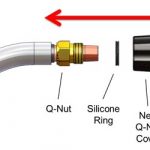
Along with the new Bernard® semi-automatic MIG guns BTB platform launching on June 2, 2014, Bernard is pleased to announce the launch of the improved Q-Nut used on all Bernard rotatable necks. It has been completely redesigned to offer a significant increase in durability. Please note that the new silicone ring, Q-Nut cover and silicone insulator are now installed from the back of the neck instead of the front. “How to install the new Q-Nut” instructions are available on our website in the How-To Guides and Videos area of our Technical Support section. Please click here to access this How-To article.
Former Q-Gun™ and S-Gun™ MIG guns will require an additional character added to the end of the existing part numbers to allow for new liner selection options. Former T-Gun™ semi-automatic air-cooled MIG guns will be adopting Q-Gun style part numbering for consistency across all guns within the new single configurator. Example old and new part numbers are shown below: Q-Gun MIG Guns Q4015GE8CM Q4015GE8CMC S-Gun MIG Guns S3012TF5CM S3012TF5CMC T-Gun MIG Guns M3010-35 Q3010MP3CMC For a limited time from June 2 until August 1, 2014, both old and new part numbers will be supported in our system to allow our distribution partners to update their computer systems. To assist our customers in converting old gun part numbers to new Best of the Best Platform part numbers, we have created an online conversion tool. To populate the data in the tool, Q-Gun, S-Gun and T-Gun MIG Gun part numbers configured between April 2011 and April 2014 were pulled and converted to the new part numbering system. Click here to access this conversion tool.
Companies make the investment in welding automation with an eye toward the potential long-term benefits it can provide — better productivity, improved weld quality and reduced costs. Protecting that investment and realizing a quick return on it is as much a matter of planning as it is one of proper equipment selection and usage. That equipment includes everything from the largest components — the robot itself — to the smallest, including the front-end consumables on the robotic MIG gun. While seemingly insignificant, the nozzles, contact tips and gas diffusers used in robotic welding can have a marked effect on the overall performance of a robotic welding cell. Frequent changeovers can result in unnecessary downtime and costs. Poorly functioning consumables, or ones that are simply not appropriate for the application, can generate weld quality issues that compound productivity delays and could lead to expensive rework. Selecting the proper consumables and implementing some best practices for storage, installation and maintenance can help ensure the best results, increase product life and support the benefits sought in welding automation. Robotic welding systems typically operate for longer periods of time and at higher amperages than a semi-automatic application, and may utilize transfer modes that are especially harsh on consumables. For example, Pulsed MIG programs — those in which the power source “pulses” between low background currents and high peaks — tend to generate high levels of heat that can erode contact tips more quickly. For that reason, it’s important to select ones that are durable enough for the application. Contact tips are available in heavy and extended life heavy duty varieties composed of chrome zirconium, and are a good option for gaining longer performance due to their hardness (compared to copper). Typically, machined grooves at the base of the thread are the identifying mark for these types of contact tips. Selecting nozzles and contact tips that are well-machined with a smooth, consistent surface is key. Smooth surfaces are much less prone to collecting spatter, and therefore more likely to last longer. In some cases, these consumables may not be the least expensive option, but it’s important to weigh out the up-front costs versus the longer-term savings of minimizing changeovers and downtime. Space is always a consideration with robotic welding systems. Fixturing and tooling can limit the ability of the robot to maneuver to a part. Bottleneck, straight or tapered nozzles are common choices to accommodate for those restrictions since they are narrower than standard nozzles and can provide better access. The more tapered a nozzle, however, typically the thinner it is. As a result, it may be less able to withstand higher amperage or higher-duty-cycles commonly used in robotic welding applications. For jobs requiring 300 amps or greater and/or those that have a high level of arc-on time, it may be best to select a heavy-duty style nozzle. These have thicker walls and insulators and are more able to resist heat. In the end, a good rule of thumb is to select the heaviest duty consumable for the application that still allows access to the tooling in order to make it last the longest. If in doubt about the best choice, consult with a robotic integrator or welding distributor for a recommendation. Employing a nozzle cleaning station (also called a reamer) is a good defense against premature consumable failure and poor performance for many different styles of nozzles. A nozzle cleaning station cleans spatter out of the nozzle and clears away debris from the retaining head that tends to accumulate during the welding process. These stations can also be outfitted with a sprayer that applies a water-based anti-spatter compound to protect the nozzle, retaining head and workpiece from spatter after cleaning. For the best results, place the nozzle cleaning station close to the robot so it is easily accessible, and program the robot to use it in between cycles (during part loading or tool transfer, for example) so it doesn’t interrupt operation. It should only take 5-6 seconds for the nozzle cleaning station to complete its job and the results are measurable — less spatter and longer consumable life. As a best practice, keep consumables in their original packaging until they are ready for use. Opening them and placing them in a bin can lead to scratches or dents that allow spatter to adhere and will ultimately shorten the products’ life or cause them to function poorly. It can also cause dirt and oils to accumulate on the surfaces of the contact tip, which may impede them from properly seating together with the gas diffuser. It can also lead to electrical resistance and heat build-up issues that can, again, shorten their life span. Wear clean gloves when handling or replacing contact tips, nozzles and diffusers. It helps prevent dirt, oil or other contaminants from adhering to them and leading to premature failure or poor performance. ?Also, keep storage containers for new consumables separate from those for discarded ones to prevent the reuse of a contact tip or nozzle that may have dents or scratches and be prone to spatter accumulation. Good electrical conductivity helps ensure consistent arc performance and weld quality, and can help minimize excessive heat and extend the life of the consumables. Installing the consumables properly — according to the manufacturer’s suggestions — and periodically inspecting them for good connections is the best way to ensure that conductivity. Channel-lock pliers or other recommended installation tools work well to install contact tips and diffusers. Never use wire cutters or side cutters. Too much pressure from these tools can damage the inside diameter of the contact tip, and they can also cause scratches that attract spatter. A good rule of thumb is to hand-tighten the contact tip until it is fully seated into the diffuser. Next, grip the contact tip with an appropriate tool as close to the base as possible, tightening it one-quarter turn past finger tight. Follow the same procedure for installing and tightening the diffuser so that it fully connects with the neck. Some contact tips can be installed and held in place by hand-tightening the nozzle. Check the manufacturer’s recommendation for proper installation instructions. Finally, look for consumables that are designed to fully seat together and mate securely, too, as these can further increase their longevity by minimizing electrical resistance and heat build-up. As with any part of a robotic welding system, the goal is to keep consumables in the best working order so that the robot is able to continue doing its job. That, in turn, allows companies to spend more time reaping the benefits of the automated welding process and less time troubleshooting problems.
Consumables — contact tips, nozzles and gas diffusers (or retaining heads) — play an important role in the welding process and can impact productivity, costs and weld quality. Many factors influence the selection of consumables, including the application at hand, available budget and more. Some welding operations may view the purchase of consumables as a place to save money, since high-quality consumables typically cost more than lower-quality consumables. However, the up-front cost of consumables is just one part of the picture. Companies should consider the long-term benefits and savings that quality consumables can provide when making the selection, since consumables are an ongoing cost in the welding process. The optimal consumables are ones that provide the best quality and the longest life. These benefits in turn help lower replacement costs, minimize downtime and improve productivity. Also, quality consumables can often reduce post-weld cleanup work, saving time and money. The design, manufacturing process and materials are all characteristics that influence the performance of these components.
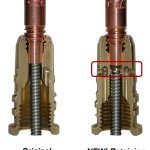
We have added internal stops to all Centerfire™ and Quik Tip™ diffusers to improve alignment between the liner and contact tip for enhanced wire feedability. This product improvement is being implemented as a running change. The new internal stop inside Centerfire and Quik Tip diffusers prevents the liner from going all the way through the diffuser, therefore changing how liners need to be installed. Liner installation will now require the removal of the diffuser. Please note that trim lengths will also be affected. See product insert INS-DIFF for more information. How can I tell the difference between Centerfire and Quik Tip diffusers with the NEW internal stop vs. the original style Centerfire and Quik Tip diffusers? To help distinguish Centerfire diffusers (shown below, left) with the new internal stop, users can check the orientation of the roll mark. In original style diffusers, the roll mark is readable when the tip end is at the top. In diffusers with the new internal stop, the roll mark is readable when the neck end is at the top. To distinguish Quik Tip diffusers (shown above, right) with the new internal stop, users can check the roll mark. In the original style diffusers, the roll mark has one Bernard starburst stamped before the part number. In diffusers with the new internal stop, the roll mark has a Bernard starburst stamped before AND after the part number. For both Centerfire and Quik Tip diffusers, a second simple method to check for an internal stop would be to insert a liner into the diffuser. If the liner will not pass all the way through the diffuser, then an internal stop is present. Please note that it is important to understand which diffuser you are using as this affects liner trim length during replacement. Please refer to the insert inside of your diffuser bag or click here for additional information about liner replacement and trim length details.
June 1, 2013 Tregaskiss is pleased to announce improvements to the design of its cutter blades for use with the TOUGH GUN® TT3 reamer and TOUGH GARD® spatter cleaner robotic nozzle cleaning stations. These new cutter blades are engineered from harder, stronger material, making them more resistant to breaking, chipping or cracking. The twin flute design with stronger edges allows for improved cutting and cleaning performance. Click here to find out more about the features and benefits of these improvements. For use with the TOUGH GUN TT3 reamer: For use with the TOUGH GARD spatter cleaner: Binzel® is the registered trademark of Alexander Binzel Schweisstechnik GmbH & Co. KG, Germany. Panasonic® is the registered trademark of Panasonic Welding Systems Co., Ltd.
Companies invest in welding automation to increase productivity, improve quality and reduce costs. Any unnecessary downtime can quickly interfere with obtaining those goals. But what about small amounts of scheduled downtime for maintenance. In most cases, a well-planned, efficient preventive maintenance (PM) program can yield positive results. Not only does it help ensure reliable throughput, but a properly executed PM program can also lower labor costs, reduce waste and minimize rework. It may even expedite the return on investment (ROI) in the automated welding system. Caring properly for the whole of an automated welding system is imperative, of course, but so too is maintaining the robotic MIG gun. In fact, the robotic MIG gun and its consumables are frequently overlooked components in the system. They are also relatively easy to maintain, and doing so can positively contribute to the efficiency of the entire welding operation. All companies, regardless of their size or arc count, can benefit from regular maintenance of their robotic MIG guns and consumables. The scope of the PM program, however, will vary according to each company’s application. For example, a company with higher-risk applications — those with large, thick parts; long cycle times and/or expensive rework — generally require more frequent care of the equipment than companies that weld smaller, less expensive parts. They simply stand to lose more (in both downtime and money) should something go wrong in the welding process. Most of the maintenance on a robotic MIG gun can be completed shift-by-shift with minimal off-line time. Welding engineers, welding supervisors, tool and die employees or members of the maintenance staff are all viable candidates to oversee the process. All personnel involved, however, need to be properly trained to identify potential problems in the weld cell and learn how to prevent them. They should also be aware that “in-process” maintenance does not constitute the whole of a PM program. Some activities may need to take place off-shift due to their complexity and the time needed to complete them. There are several key components to a good PM program for robotic MIG guns. Before starting any task, it is important to have the correct tools for the job. For example, be sure to have the proper adjustable or crescent wrench for changing diffusers or retaining heads, as well as the recommended pliers, welpers or tip installation tools for installing contact tips. Keep a sharp pair of side cutters on hand, too, to trim the robotic MIG gun liner. These tools help prevent burrs on the liner that can wear or drag on the welding wire. After establishing that the proper tools are in place to support the PM program, consider the following practices. During pauses in production — when the robot finishes welding a part or during routine contact tip changeover, for example — check for clean, secure connections between the MIG gun neck, the diffuser or retaining heads and the contact tip. Also, check that the nozzle is secure and any seals around it are in good condition. Having tight connections from the neck through the contact tip helps ensure a solid electrical flow throughout the components and minimizes heat build-up that could cause premature failure, poor arc stability, quality issues and/or rework. It also reduces the opportunity for burnbacks, which can lead to unplanned downtime for changeover. Look for changes in consumable colors, too, as those are a good indication that they are loose and require tightening. Spatter build-up can cause excessive heat in the consumables and MIG guns, block shielding gas flow, and increase costs for inventory and downtime to change over nozzles, diffusers and contact tips. Visually inspect consumables on a regular basis for signs of spatter, replacing them as needed. Also, consider adding a nozzle cleaning station (also called a reamer or spatter cleaner) to the weld cell. Like its name implies, a nozzle cleaning station removes spatter (and other debris) that builds up in the nozzle and diffuser. Using this equipment in conjunction with a sprayer that applies an anti-spatter compound can further protect against spatter accumulation. Track how long it takes for the liner in the robotic MIG gun to become worn or fouled, and schedule a replacement as needed. Replacing the liner prior to a failure prevents unplanned downtime to remedy wire feeding or quality problems later. Also, always cut the liner according to the manufacturer’s recommendation to prevent kinking and poor wire feeding that can lead to premature contact tip failure and/or arc instability. Periodically, release the drive rolls and check the force required to pull the welding wire from the feeder through the robotic MIG gun. Excessive drag indicates that there is a build-up of debris in the liner and it needs to be replaced. It is best to perform this task in between shifts, as opposed to during contact tip changeover, as it tends to take more time. Check regularly that the welding cable leads are properly secured and assess the condition of the welding cable on the robotic MIG gun. Look for signs of wear and be certain that the cable is not rubbing against any part of the robot’s metal casting, as that friction can cause the cable to loosen or become damaged. A worn spot on the robot (e.g., the absence of paint) or on the tooling is a good indication that the cable is rubbing against it. Rectifying the situation will likely involve repositioning the tooling or a cable management device and may need to occur while the robot is off-line. Still, a quick in-process inspection that identifies the issue can flag it for a later, proactive solution. Preventive maintenance programs don’t have to be complicated — only effective. Most of the robotic MIG gun maintenance discussed here can be completed on a shift-by-shift basis with minimal interference to cycle times and with minimal labor costs. The scope and frequency of a PM program will vary from company to company, of course, but carefully executed maintenance activities can help companies better realize the potential of their automated welding operation. And it can reduce costs by preventing problems, instead of being forced to resolve them.
Worldwide, companies serving the automotive industry have faced a unique set of challenges in the last several years, including changes in material types, a lack of skilled labor and initiatives by OEMs to decrease the weight of vehicles. Still, as the economy continues to rebound, each must find ways to maintain their productivity and profitability — often with fewer employees than before the recent recession. A large part of maintaining that productivity is to ensure high levels of uptime in the robotic welding operations in order to maximize net throughput. It is equally important to find ways to minimize errors and obtain predictive weld data to help anticipate problems in the operation. Conventional issues like spatter, burn-through and poor part fit-up often hinder these attempts, as can the need to manage large amounts of inventory and contend with downtime to service welding equipment. That’s why it’s so important, too, for companies to find equipment that minimizes the total cost of ownership. Unfortunately, there is no single answer to these challenges. There are, however, some considerations that may help reduce automotive suppliers’ pains and assist in other interrelated parts of the process. Best practice meetings: When possible, suppliers in the automotive industry should work with original equipment manufacturers (OEMs) and vendors or welding distributors who can engage regularly in best practice meetings. These meetings can occur by conference call, webinar or in person, and can help determine what practices in the welding operation are working most effectively and what areas need improvement. “Open issues” can be prioritized in order to determine time-phased solutions. These meetings can be especially helpful to companies with multiple locations (even globally), since they help identify opportunities for changes that could positively affect other facilities. They are also an excellent platform for brainstorming error-proofing ideas and serve to open communication among the parties involved in the success of a company’s welding operation. Ultimately, the goal is to spread an assessment of the operation to a broader peer group, extending the company’s core competencies to gain solutions from others’ input. Streamline vendors: Automotive suppliers, particularly those with multiple locations, may want to consider purchasing their robotic gas metal arc welding (GMAW) guns, peripherals, consumables and other welding supplies from a single-source vendor via a welding distributor. Having multiple vendors may appear to provide cost savings on the surface; however, a per-item approach can actually increase the total spend. Instead, by single sourcing a product line, a company is better poised to maximize their purchasing power with one vendor and gain loyalty discounts. The vendor may also be more inclined to aid in new efficiencies and groundbreaking technologies. Plus, a trusted single-source vendor can often help automotive suppliers assess their total weld spend, streamline inventory and reduce costly paperwork. The goal is to work with a vendor who can “own the arc,” providing assistance throughout the whole welding operation by assessing predictive data and offering suggestions for ongoing improvements. “Co-opetition”: If you already work with several welding vendors, co-opetition is your next best option to maintaining an effective welding operation and in some cases can occur as part of best practice meetings. This term refers, in short, to cooperation that occurs between the various equipment manufacturers who are building the end user’s welding solution. Sometimes these companies have competitive product overlap. For example, the manufacturer of the robotic GMAW gun or welding wire may be in direct competition with the company whose power sources are in an automotive supplier’s weld cell. Even so, finding equipment manufacturers who are willing to work together to address problems in the welding operation is key to resolving issues when they arise. A problem with the contact tip, for example, is usually a barometer of other things happening in the process. In short, it is very often a symptom of a problem, as opposed to the root cause. Having partners who are willing to put aside competitive differences for the good of resolving problems like these is important to gaining good welding performance. If this co-opetition is not feasible, companies may want to consider moving to a single-source vendor. Equipment standardization: Recent increases in demand for production have caused some automotive suppliers, especially those in North America, to make capital investments that they previously postponed during the recession. When possible, standardizing on a single brand and style of welding power source, robotic controller, and GMAW gun and consumables during this investment can streamline inventory and maintenance procedures, thereby lowering management costs. It can also help companies avoid long lead times associated with specialty products and improve access to spare parts. For companies in an organic growth mode with new programs and/or greenfield operations, this standardization can help in long-term equipment re-deployment to other facilities, as well as streamline the learning curve among employees, and improve adoption rates and costs. For companies that are in acquisition mode, however, this standardization may not be feasible. Instead, these suppliers should, at a minimum, consider standardizing on a single brand and style of robotic GMAW guns and consumables to minimize inventory. Doing so can also reduce the risk of improper consumable installation, which often leads to unscheduled downtime to rectify. Appropriate welding technology: Many automotive suppliers rely on tandem- welding operations as a means to generate greater productivity. Companies can use this process for line production in the cells housing the majority of the welds. The benefit is that these operations require less floor space and can simultaneously improve throughput. Advancements in single arc pulsed technology have also proven very efficient in providing faster travel speeds and minimizing spatter. This single arc technology, which effectively lowers the average amperage level during welding (by regularly switching the current between high peak amperages and low background amperages), is also quite easy to operate. Given the reduction in workforce in the automotive industry, combined with an overall shortage of skilled labor, this less complex (but highly efficient) technology has already proven beneficial for many automotive suppliers. Companies should work with an appropriate welding distributor or robotic integrator to assess the individual application in order to determine the most appropriate welding technology. Error-proofing: In addition to standardizing equipment when possible, using welding products that minimize the opportunity for human errors is an important part of keeping the welding process flowing. For example, nozzle detection can eliminate the potential of excessive rework or scrap. Avoiding errors in equipment installation is also critical, as missing or incorrectly installed components on the front end of a robotic GMAW gun can cause it to become electrically alive, leading to premature failure and poor welding performance. Preventive maintenance: Even though preventive maintenance or PM may have become a commonplace buzzword in recent years, the fundamentals are still critical to providing good welding performance and reducing unscheduled downtime in the automotive industry. Companies should take care to inspect all connections in the ground cables, feeding assembly, wire feeder, GMAW gun and consumables on a regularly scheduled basis. Replacing worn components during scheduled downtime (at the beginning of a shift, for example) can help prevent problems during production. On some welding robots, “predictive maintenance” technology is available to send alerts when consumables need to be changed. Built-in buffers: As is typical in automotive “just-in-time” applications, suppliers want to reduce work in progress (WIP) — maintaining only strategically determined micro-inventories — and keep parts flowing (Takt time). To continue that workflow but still allow for any instances of stoppage in a robotic welding cell, suppliers may consider building a buffer into production. For example, if a company has a production line of 40 welding robots, breaking that line into fifths (five sections of eight robots), allows them to address any instances of failure while causing a stoppage of only eight robots instead of shutting down production on all 40. That buffer can mean a significant difference in terms of lost production and money. And while no single one of these considerations can ensure the levels of productivity and profitability to which automotive suppliers strive as production demands increase, they can be a step in the right direction. Automotive suppliers should consider working with a trusted welding equipment manufacturer and vendor to discuss a plan for assessing their robotic welding operation and identifying opportunities for improvement.
Consistent productivity, high quality and low costs are all key components in a successful welding operation. Gaining these advantages depends on everything from the equipment and filler metals to the skill of the welding operators and the techniques being used in the process. The shielding gas also plays a critical role. Both the gas metal arc welding (GMAW) process (using solid or metal-cored wires) and the gas-shielded flux-cored arc welding (FCAW) process require the use of an external shielding gas, each type of which offers distinct characteristics. Knowing how to select the appropriate one for the application can go far in helping obtain the desired welding performance and minimizing the downtime for rework caused by poor weld quality. To help, following are some basics of what you should know about shielding gases. The primary purpose of shielding gas is to protect the molten weld pool against elements in the atmosphere, including oxygen, nitrogen and hydrogen. The reaction of these elements with the weld pool can create a host of problems, including (but not limited to) porosity and excessive spatter. Shielding gas also plays an important role in determining weld penetration profiles, helping maintain arc stability and achieving the desired mechanical properties in the finished weld. Shielding gas can also affect the transfer of the filler metal from the arc to the weld joint, which in turns contributes to the efficiency of the welding process and the quality of the weld. Other important factors that shielding gas help determine include the weld bead appearance, and weld toughness and strength. The four most common shielding gases used in the welding process are carbon dioxide, argon, helium and oxygen. Each has specific characteristics and factors such as cost, available labor (i.e., for weld preparation) and the weld properties desired — all considerations when selecting which shielding gas is best for a given welding application. Carbon dioxide (CO2): This gas is the most common of the reactive gases used in the welding process and also the least expensive of the shielding gases. It is also the only one able to be used without the addition of an inert gas. One of the biggest advantages of pure CO2 is that it provides deep weld penetration, which is useful when welding thick material. It does, however, tend to create a less stable arc and more spatter than when it is mixed with other gases, including argon. This additional spatter can lead to downtime for post-weld cleaning. Pure CO2 is also limited to use in short circuit welding processes. Argon: When welding aluminum, magnesium or titanium, it is common to use 100 percent argon as a shielding gas due to its stable arc features. Adding argon to a CO2 shielding gas is also an option for materials like carbon steel. It provides consistent weld quality and appearance and good weld pool control, and can help minimize post-weld cleanup. Argon also produces a narrow penetration profile, making it useful for fillet and butt welds. Typical mixtures include a balance of 75 to 95 percent argon with 25 to 5 percent CO2. An argon/CO2 shielding gas mixture allows the use of a spray transfer process, which lends itself to high productivity rates and visually appealing welds. Helium: Helium is generally used when welding non-ferrous metals. It is also used in a tri-mix formula of argon and CO2 for welding stainless steels. The gas produces a wide, deep penetration profile, making it suitable for welding thick materials, and also creates a hot arc, which helps increase travel speeds and productivity rates. Helium is typically used in ratios of 25 to 75 percent helium with an appropriate balance of argon. Adjusting these ratios changes the weld penetration, bead profile and travel speeds. It’s important to note that helium is more expensive than other gases and requires a higher flow rate than argon (because it is so light). For this reason, it’s imperative that companies calculate the value of the productivity increase against the increased cost of this gas. Oxygen: Oxygen is a reactive gas typically used in ratios of 9 percent or less. The addition of the gas to a mixture with argon helps to improve weld pool fluidity, weld penetration and arc stability, particularly when welding carbon, low alloy and stainless steels. Because the gas causes oxidation of the weld metal, it is not recommended for use with aluminum, magnesium, copper or other exotic metals. To achieve the best results out of a chosen shielding gas, it’s important to select the proper front-end consumables. These consumables — the gas diffuser, contact tip and nozzle — play a critical role in delivering the shielding gas to the weld pool and also protecting it from the atmosphere. Consider these tips to help with the selection. 1. Choose consumables that have a smooth surface to help resist spatter build-up that could block shielding gas flow and lead to issues, such as porosity. 2. Choose an appropriate size nozzle for the application. A nozzle that is too narrow for the application can easily become clogged with spatter, again, hindering its ability to deliver enough shielding gas to the weld pool to protect it. 3. Consider using nozzles with a built-in spatter guard. These designs add a second phase of shielding gas diffusion, resulting in even smoother, more consistent shielding gas flow. 4. Be certain to select quality gas diffusers to ensure smooth and balanced gas flow. Consult with a trusted welding distributor for recommendations. When your company is responsible for rebuilding, repairing and up-fitting vehicles that deploy to firefighting and rescue situations day in and day out, quality is non-negotiable. Every component must be precisely tooled, every weld precisely placed. The employees at True North Emergency Equipment can certainly attest to that fact. They are a premier service provider for custom fire engines, water tenders, and rescue and emergency vehicles used across the United States, and especially in the Northwest. “Our people understand and believe that our vehicles need to be serviced to complete their mission. They are lifesaving vehicles,” explains Russ Sheldon, operations manager at True North Emergency Equipment. “We don’t just inspect quality into our products. It has to be built in there.” That philosophy spans every aspect of the Hillsboro, Ore.-based company. According to Sheldon, almost every vehicle the company works on is unique, which means it requires the right equipment to work on it – regardless if the job is rebuilt, repaired or upfitted. Recently, True North Emergency Equipment added new MIG welding guns and consumables from Bernard to their welding operation. They found that the products didn’t just stand up to the tough demands of their applications, but that the MIG guns also proved more versatile and comfortable for the welding operators. Plus, the consumables helped reduce their inventory and costs. Not surprisingly, these are benefits that the fabricators and management alike welcomed. In a typical day at True North Emergency Equipment, there are no typical applications. The company could be welding 1/8-inch-thick sheet metal compartments or working on 1/2-inch steel mounting brackets. Most days, fabricators also tackle the nuances of aluminum welding for good measure. Adding to the challenge of welding multiple materials, these same fabricators also find themselves working at awkward angles on a regular basis. According to Sheldon, “Fabricators here weld overhead, vertical and horizontal, and a lot of the components we fixture. So to say we have a standard welding position or a set position … no, that would not be the norm here.” Despite those challenges, the welds have to look, in Sheldon’s words, “sharp.” “Anything exposed has to look top notch. The care in the detail basically has our fabricators’ artistic signature on it,” he adds. Kyle Plock, a True North Emergency Equipment fabricator, has noticed that the company’s new Bernard Q-Gun™ (400 amp) series MIG guns help make that quality easier to achieve — even on out-of-position welds. The gun features a rotatable neck that users can change the position of without any tools. They simply unscrew the durable plastic ring at the base of the neck, rotate the neck to the desired angle and tighten the ring. “With the Q-Gun MIG gun, all you have to do is loosen the neck, turn it and tighten it back up where you want it,” says Plock. “With the old guns, we had to get an Allen wrench, loosen the socket head cap screws, then turn the neck and tighten it back up. So this [gun] is a lot quicker and easier.” Plock adds that this feature comes in handy especially when he’s working on an application that doesn’t allow him a lot of room to maneuver or reach for tools (as would be needed to change neck angles on the older style guns True North Emergency Equipment used). “If we’re inside of a truck in the pump house welding a structure, I often have to turn from one direction to another,” he explains. “If I want this neck to go a different way to fit in a tighter spot, I can turn it without having to twist my hands around.” The addition of a dual schedule switch on the Bernard Q-Gun series MIG guns that the company uses adds to its versatility for fabricators like Plock and the other fabricators. The dual schedule switch allows them to change wire feed settings (without having to go back to the power source) when they alternate between welding thinner and thicker materials. “Personally, I like that if I’m at the top of a truck and need to make an adjustment [to the wire feed speed], I don’t have to climb all the way down to the machine, make the adjustment and then climb all the way back to where we were working,” says Plock. “With this setup here, we don’t have to do that. I just make my adjustment and keep on going. It’s a lot more efficient.” Mitch James, plant manager and field trainer for True North Emergency Equipment agrees that these features and the versatility that his team gets from the new MIG guns is an asset. “The features have made a big difference in comfort and in improving throughput time. There’s just no messing around and adjustment with them,” James explains. True North Emergency Equipment paired its new Bernard Q-Gun series MIG guns with the Centerfire™ consumables system, also from Bernard. These consumables feature a “drop-in,” threadless contact tip that fabricators can change back quickly after a burnback to help reduce downtime and get them back to work faster. The contact tips also have a large diameter tip base and tapered seat that, combined with the gas diffuser, provides better electrical conductivity and heat transfer. For True North Emergency Equipment, those features translate to one single benefit: The consumables last longer than their previous brand. “There was a time when we would have to buy our welding tips 25 or 50 in a bag,” says James. “I actually had team members come to me [before Centerfire] and say they were running through three, four, five, six, eight tips in a matter of just a few hours from burnbacks and such things.” Since the conversion to the Centerfire consumables system, James says that their consumable usage has dropped tremendously. “We don’t have to stock nearly as much anymore. We’re stocking about 75 percent less or about 25 percent of what we used to stock in consumables,” he explains. “That’s saving us quite a bit of money.” It’s all about quality at True North Emergency Equipment — and quality is what keeps the company’s customers and employees happy. The fabricators and management all take pride in knowing that they are helping rebuild, repair and refurbish the best, safest and most durable fire and rescue vehicles for their customers. “Every customer has exacting spec and we suit that need. That’s our niche. That’s who we are,” says Sheldon. “And cater to the high end of the market — always.” That the company has found the right tools to help its employees reach that goal isn’t lost on them, says James. “In the end, it’s all about attitude; emotions; how people feel about what they’re doing. If you feel good, you’re going to do good. So that’s the whole ball of wax right there.”
The improved swivel design on the Bernard® FILTAIR™ fume extraction MIG gun now uses threads to retain the vacuum hose and eliminates the front band-it clamp from both amperage models. This redesign will improve performance and avoids replacing the hose clamp with a larger head. The new design threads into the vacuum hose and cannot be removed unless the hose is cut to remove it from the threads. Removing the front band-it clamp also eliminates the possibility of the clamp getting snagged on other equipment, gloves, clothing, etc. Did any part numbers change? Answer: The new threaded swivels are backwards compatible with existing guns. As a result, swivel part numbers did not change. How can you tell the difference between the old version and the new 2013 design? Answer: New 2013 design will not have the metal front band-it clamp located on the hose near the rear of the handle. See Figure below:
March 1, 2013 Tregaskiss is pleased to announce an improvement to our fixed automatic series MIG guns. These robust machine torches are engineered for hard tooling applications requiring a durable welding torch, and they now feature a one-piece high strength phenolic handle.
Your welding operation, just like any other portion of your business, offers opportunities to conserve resources. Consider these 10 money-saving tips for MIG gun care and maintenance as a good first step. And don’t be surprised when you find these tips improve your welding performance along the way! Keep your nozzles, gas diffusers and contact tips in the original package in which they were shipped until you are ready to use them. Doing so prevents scratches and/or dents where spatter can accumulate and cause the consumables to fail prematurely. It also prevents dirt, oil or other debris from adhering to the consumables and inadvertently entering the weld puddle. Remember, proper storage and handling doesn’t just lower your actual costs for consumables, it can also prevent weld defects that require costly rework. Choose the most appropriate neck for your MIG welding application in order to increase comfort and control, and save money. Rotatable necks, for example, adjust without tools so that you can quickly change neck angles by loosening a plastic ring and tightening it once you’ve determined your desired position. These types of necks are especially useful if you find yourself welding on many different applications and angles throughout the day, and they minimize costs for inventory and changeover. For hard-to-reach areas, you may also want to consider a neck coupler, which allows you to connect two existing necks together to extend your reach — again without the cost of purchasing a new or specialized neck. Flex necks are also a good option for saving money, and gaining greater comfort and control, particularly for applications with tighter joints. You can bend these necks to multiple angles to work around corners or get into small spaces without the expense of stocking different neck angles. Regularly perform a visual inspection of your nozzle — inside and outside — to look for spatter build-up. If there is accumulation, either clean the nozzle with a tool designed specifically for the job or replace the nozzle if necessary. During your inspection, also check that the nozzle, contact tip and retaining head are tightened properly, as these components can naturally loosen during welding. Inspecting and tightening your consumables regularly (several times during a welding shift is ideal) help ensure good shielding gas coverage, reliable electrical conductivity and consistent weld quality. Always trim your MIG gun liner according to the manufacturer’s recommendations, using the proper tools and cutting it to the correct length. Too long of a liner can cause kinking, while cutting it too short allows debris to build up between the liner and the gas diffuser. Either way, the wrong liner length can cause poor wire feeding and premature failure of both the liner and the contact tip. When possible, use a liner gauge to determine the proper length for your particular liner and be certain that there are no burrs or sharp edges after you cut it. Also, keep the liner away from contaminants (e.g., don’t let it drag on the floor) during installation and be sure your hands or gloves are clean. These precautions help prevent contaminants from entering the weld puddle and causing costly weld quality issues. Consider using a front-loading MIG gun liner to ease and speed liner replacement. This type of liner cuts installation time nearly in half compared to using a rear-loading liner, saving you downtime and unnecessary labor costs for changeover. Some manufacturers offer a spring-loaded module that works in conjunction with a front-load liner to help minimize issues if you accidentally trim the liner to an incorrect length. These modules are housed in the power pin and put forward pressure on the liner after installing it from the front of the gun. The modules allow up to 1 inch of forgiveness if the liner is too short. There are also jump liners available. These replace only the most commonly worn and clogged liner area — from the neck to the contact tip — to reduce the amount of time a gun is offline and minimize inventory for full-length liners. These jump liners enable quick and easy neck change-out so the MIG gun can be easily adapted to fit multiple applications. When appropriate, switching from heavy-duty contact tips to standard-duty ones can help lower your overall consumable costs, while still providing you with reliable welding performance. If you have lower heat applications, brief arc-on times for short welds or tacks, or if you are using mixed shielding gases and small diameter wires, standard-duty contact tips may be a better option and they cost less. You can also use these types of contact tips if you have applications with restricted access, as the smaller outside diameter can help increase gas coverage and reduce the nozzle’s bore size, making it easier to reach tough joints. Look for non-threaded contact tips that connect or seat securely with the gas diffuser. This type of design provides consistent electrical conductivity and helps dissipate heat more readily. That’s important, since cooler running consumables last longer and provide more consistent performance. A nozzle with a thread-on design helps keep the contact tip centered for better weld placement and it can minimize the opportunity for spatter. This type of design can also withstand demanding jobsite use and abuse. As an additional defense against spatter accumulation, purchase nozzles that have a smooth, non-porous surface. Be sure that the nozzles are free of any sharp edges or flat spots that would further allow spatter to adhere. As when handling the liner, be sure you have clean hands or gloves when you are handling or installing your nozzle. Dirt, oil, grease or other debris can easily adhere to nozzles and later enter the weld puddle, causing weld defects. These contaminants can also cause premature failure of the component. Use the shortest length MIG gun cable possible for your welding application, as it helps prevent kinking and premature wear of both the cable and the MIG gun liner. It also helps prevent wire-feeding problems that could lead to an erratic arc, poor weld quality and unnecessary downtime for rework or consumable replacement. Steel monocoil cables are also an excellent means to prevent kinking. Also, remember to choose the correct diameter liner and contact tip for your welding wire, as this prevents similar problems and helps extend the life of these consumables. Whenever possible, purchase MIG guns and consumables that are backed by a reliable manufacturer’s warranty, and use all guns and consumables as intended so as not to void the terms and conditions. Also, consider the up-front cost versus the long-term savings of purchasing sturdier and more expensive consumables. They will likely last longer, reducing downtime associated with changeover and the cost of the consumables themselves. Keep these tips in mind and you can get back to welding faster… and keep conserving your resources.
Implementing a robotic welding system isn’t something that happens on a whim — at least not successfully. Converting to this technology can help companies gain greater productivity, improve quality and reduce costs in the welding operation, but the process requires thorough planning to gain those results. Working closely with a robotic integrator is a good step to ensure every aspect of the implementation is carefully orchestrated and that the robotic welding system works properly for the given application — in reality, not just theory. Before adding a robotic welding system, it’s helpful to know some key factors that can maximize the return on investment (ROI) in the technology and also help prevent potential problems. The quality of part produced by a robotic welding system depends on the quality of the part that enters the weld cell. That’s why it’s not uncommon to hear the phrase “garbage in, garbage out” when it comes to robotic welding systems — if the part entering the welding cell is flawed, the subsequent weld will be, too. To protect against poor weld quality, it is critical to have simple, consistent parts that allow the robot to execute the weld in the same location, repeatedly. Having a blueprint or electronic CAD drawing is helpful for confirming that repeatability. Robotic integrators can review the blueprint or they may want to create a software simulation that assesses the suitability of the part for the robotic welding system. After the assessment, they can advise of any adjustments that need to be made prior to implementation. Proper fixturing is also critical to achieving part repeatability, regardless of whether the application is high volume/low variety or low volume/high variety. Parts that meet the exact specifications can easily be welded incorrectly if they are not held in an exact position during the process. Many robot manufacturers offer vision systems to aid in part recognition and to ensure that the weld path can be altered in real time if part fit-up issues exist. These systems usually work very well, but may cost more. Robotic welding systems require a properly trained operator to oversee them. A skilled welding operator or an individual with previous robotic welding management experience is a good candidate for the job. Again, a trusted robotic integrator is an excellent resource to provide the necessary training, which should cover proper programming, troubleshooting and preventive maintenance. As a best practice, companies should also consider ongoing training support to keep the operator’s knowledge of the system up to date. In many cases, robotic OEMs offer online tutorials, troubleshooting information and/or additional on-site training as aftercare support. Many facilities already have fume extraction systems in place for manual welding operations, but converting to a robotic welding system may require additional equipment to help maintain a healthy work environment. With the increased production brought forth by a robotic welding system, there is also an increase in fume generation. Given the stringent regulations and recommendations from OSHA (Occupational Safety and Health Administration) and other safety regulatory bodies, proper equipment is necessary to maintain compliance. For larger facilities with higher production robotic welding applications, a centralized fume extraction system is a good option. These systems involve the installation of ductwork throughout the facility and the placement of fume extraction hoods over the welding cell. Smaller shops with fewer robotic welding cells may want to consider a less expensive portable fume extraction system. Operators can wheel these systems right next to the welding cell and adjust the extendable arm toward the robot to suction the fumes. It is also critical that the proper cage and screens are in place around the robotic welding system to protect employees from the welding arc and moving parts within the cell. Adding weld data monitoring capabilities and/or peripherals into a robotic welding system can help improve weld quality and productivity. Achieving these results, however, requires an additional up-front investment. Weld data monitoring (whether integrated in a power source or via a third party) allows companies to track the parameters of individual welds, determine the cause of weld defects and identify general inefficiencies in order to rectify those problems and optimize the process for peak quality and productivity. This equipment requires the purchase of software and computers, as well as the establishment and maintenance of an Ethernet network throughout the facility. Companies will also need tech-savvy individuals to review the data and make the necessary adjustments to the robotic welding system according to the data provided. Similarly, the addition of peripherals — particularly a nozzle cleaning station (also called a reamer or spatter cleaner) can improve weld quality and productivity. By cleaning spatter from the inside of the welding consumables on the front end of the GMAW welding gun, this peripheral helps extend consumable life, reduces downtime for changeover during production and also reduces the cost for replacing consumables. Nozzle cleaning stations also help minimize the loss of shielding gas coverage (due to spatter build-up) that could lead to poor weld quality and rework. Preventive maintenance of the entire robotic welding system, including the robotic GMAW (gas metal arc welding) gun, consumables and cables is an important step in protecting the investment in this technology. Neglecting maintenance can easily lead to unscheduled downtime, poor quality parts and/or costly repairs. It may even lead to failures that require equipment replacements. Scheduling time to check connections throughout the system, clean fixturing (to prevent debris that may affect part fit-up) and check TCP (tool center point) helps ensure that the robotic welding system continues to operate within its proper parameters. Certain maintenance can occur in between shifts — cleaning off the robot or changing consumables, for example — while other activities like greasing the robot’s joints may occur less frequently and during a longer scheduled stop. Companies need to assess their individual needs and plan the preventive maintenance schedule accordingly. For larger companies, hiring a maintenance crew to take care of preventive maintenance may be desirable. Retrofitting robotic welding systems is a common practice among many companies, particularly those investing in automation for the first time or for smaller shops requiring only one or two weld cells. It’s significantly less expensive to purchase a used robot than a new one. When retrofitting a robot, however, it is absolutely essential that it is capable of communicating with the selected power source if companies are to have the entire robotic welding system function properly. New power sources feature software that may not be immediately compatible with a robot that is older, or in some cases, the robot may need a specific robotic GMAW gun that isn’t readily available at a welding distributor or possibly even discontinued. For this reason, it is critical to contact an experienced robotic integrator who can both recommend and help set up all components in the retrofitted robotic welding system. The investment in this assistance can help ensure the proper functioning of the equipment and the long-term cost savings sought by implementing the system. Not to mention, it can also save a lot of frustration and downtime. Robots rely on the input of the operator to execute a given task. That task, however, doesn’t have to be limited to just welding or to welding the same part every time. Operators can program the robot to weld multiple parts over the course of a single shift, enhancing the versatility of the robotic welding system and positioning the company to produce additional output. Operators can also program robots to move parts so that a particular unit is not sitting idle when it isn’t tasked with welding; there are components that offer gripping capabilities and can be installed in addition to a welding gun. Companies may even have a tool dock that allows the robot to be fitted with a different tool and proceed with its work. Some companies with multiple robots may also benefit from installing a vision system in order to check on the work of the others, ensuring that part fit-up is optimal and that the robot is correctly placing welds. Given that the goal of any robotic welding system is uptime, having the versatility to use a robot for multiple tasks can contribute meaningfully to the other advantages of this technology – increased productivity, improved quality, decreased costs — and may help give companies a real competitive edge.
Investing in welding automation can be a relatively quick way for companies to achieve greater productivity, improve weld quality and reduce costs. But protecting that investment is key to maintaining these benefits over the long term. Preventive maintenance (PM) programs are an easy and cost-effective way to help. These programs not only protect against costly downtime, but they can also help lower labor costs, reduce waste and minimize rework. In some cases, they may even expedite the return on investment (ROI) in the automated welding system. PM programs, however, shouldn’t be limited to just the robot or the power source. Protecting your robotic MIG gun and consumables with a PM program is also critical. It can help minimize weld defects, reduce downtime for changeover, and keep the robot up and running longer. Consider these tips to help along the way. There are four key tasks to consider as part of the PM program for your robotic MIG gun and consumables. During routine pauses in production, look for secure connections along the length of the robotic MIG gun. Be certain that the MIG gun neck, retaining head (diffuser), contact tip and nozzle are all tight and clean. Also check that the seals around the nozzle are in good condition. Good connections help ensure smooth electrical flow and minimize heat build-up that could lead to poor welding performance and/or premature consumable failure. Look for signs of wear on the welding cable and make sure that you have properly secured welding cable leads. Also, make sure that the welding cable isn’t rubbing against any part of the robot’s metal casting, as friction can cause the cable to loosen or become damaged. Inspect the power pin, as well, to make sure it is secure. Regularly inspect the nozzle, contact tip and retaining head for spatter build-up and replace these consumables as necessary. Spatter build-up can block shielding gas flow, leading to poor weld quality, and also lead to premature consumable failure due to a build-up of heat. Ideally, use a nozzle cleaning station (also called a reamer or spatter cleaner) in conjunction with a sprayer that applies anti-spatter compound to minimize spatter build-up. Track how long it takes for the liner in your robotic MIG gun to become worn and schedule a replacement accordingly. Gauging the life of your liner can help prevent unplanned downtime to address wire-feeding or quality issues resulting from routine wear or clogging. For all preventive maintenance on your robotic MIG gun, be sure to use the proper tools for the job. Robotic MIG gun and consumable manufacturers typically provide recommendations for their products. The frequency and scope of PM activities for your robotic MIG gun depend largely on your application. You should be able to complete most activities, such as checking for secure connections or consumable changeover, on a shift-by-shift basis during routine pauses in welding. Other activities, such as liner replacement, may take longer and need to be completed off-shift. Regardless of whether you weld a high-volume components or larger low-volume assemblies, you should manage the period of time in between routine robotic MIG gun inspections to effectively reduce the downtime required to complete the PM cycle. A small investment of planned down time will mitigate the risk of larger challenges that most often prove more costly in terms of time. For all types of applications, it’s best to develop an initial plan for PM activities for your robotic MIG gun. Once developed, you can adjust accordingly until you feel that you have the program that works best for you.
Top Things to Teach a Robotic Welding Supervisor
Top Things to Teach a Robotic Welding Supervisor

Tip No. 1: Understand the robotic welding system
Tip No. 2: Establish documentation, maintenance and control systems
Tip No. 3: Look for continuous improvements
Tip No. 4: Rely on the available resources
Making responsible decisions that lead to growth?
Premier Boat Fabricator Improves Productivity 25 Percent with New MIG Guns and Consumables
Premier Boat Fabricator Improves Productivity 25 Percent with New MIG Guns and Consumables

Gaining greater productivity

The Results
PRODUCT UPDATE – Neck Insulators for BTB MIG Guns
PRODUCT UPDATE –
Neck Insulator Selection for BTB MIG Guns
Neck / Handle Consumables Insulator Part Number 200A 300A 400A 500A 600A Fixed neck for T series handles TOUGH LOCK® 402-11 Quik Tip™ 4423R Centerfire™ 4323R 4423R Rotatable neck for O, B, T series handles TOUGH LOCK 10012 Quik Tip 4423R Centerfire 4323R 4423R Fixed necks for O, B series handles TOUGH LOCK 10012 Quik Tip 4423R Centerfire 4323R 4423R PRODUCT UPDATE – Common Straight Rear Strain Relief for BTB MIG Guns
NEW PRODUCT –
Common Straight Rear Strain Relief for the BTB MIG Gun Platform
Exceptions: Black Clamshell Rear Strain Relief with Bernard and Euro Power Pins

PRODUCT IMPROVEMENT – Dual Thread Necks for BTB MIG Guns
PRODUCT IMPROVEMENT –
Dual Thread Necks for BTB MIG Guns
Beginning on June 2, 2014, Bernard’s new BTB MIG gun platform brings our Q-Gun™, S-Gun™ and T-Gun™ semi-automatic air-cooled MIG guns into a single gun line and single configurator. As a part of this launch, all fixed and rotatable necks offered through the new BTB MIG gun configurator will now feature a dual thread that allows the installation of your choice of consumables – TOUGH LOCK®, Centerfire™ or Quik Tip™ – without the need for special adaptor parts.How can I tell the difference between single and dual thread necks?

PRODUCT CHANGE – Bernard Power Pins
PRODUCT CHANGE –
Bernard Power Pins
NEW PRODUCT – Bernard Conventional Liners
NEW PRODUCT –
Bernard Conventional LinersCompatible with BTB Semi-Automatic MIG Guns and Legacy Q-Gun, S-Gun, & T-Gun Series MIG Guns

New Bernard Conventional Liners
Wire Size Liner Color 15′ (4.57 m) 25′ (7.62 m) 0.023″-0.030″ Yellow L1A-15 L1A-25 0.030″-0.035″ Green L2A-15 L2A-25 0.035″-0.045″ White L3A-15* L3A-25* 0.045″- 1/16″ Red L3A-15** L4A-25** 5/64″ Blue L6A-15 L6A-25 3/32″ Grey L7A-15 L7A-25 7/64″-1/8″ Black L8A-15 L8A-25
**Standard Liner for 1/16″ GunsBernard and Tregaskiss Conventional Liner to New Bernard Conventional Liner Cross Reference Chart for Bernard Semi-Automatic MIG Guns
Wire Size Bernard Liner Part Number Tregaskiss Liner Part Number New Bernard Conventional Liner Part Number 0.023″-0.030″ 43015 415-23-15 L1A-15 0.030″-0.035″ 43015 415-30-15 L2A-15 0.035″ – 0.045″ 44115 415-35-15 LS3-15 0.035″- 0.045″ 43115 — L3B-15 0.045″ – 1/16″ 44215 415-116-15 L4A-15 0.045″ – 1/16″ 43215 — L4B-15 5/64″ 44315 415-564-15 L6A-15 3/32″ 45415 415-332-15 L7A-15 7/64″ 45615 615-18-15 L8A-15 1/8″ 46715 615-18-15 L8A-15 PRODUCT UPDATE – New Handle Names for the BTB MIG Gun Platform
PRODUCT UPDATE –
New Handle Names for the BTB MIG Gun Platform
Beginning on June 2, 2014, Bernard’s new Best of the Best Platform brings our Q-Gun™, S-Gun™ and T-Gun™ semi-automatic air-cooled MIG guns into a single gun line and single configurator. Since we now have six gun handle styles within a single configurator, we have developed the following naming scheme for our handles per the chart below:


PRODUCT IMPROVEMENT – Q-Nut for BTB MIG Guns
PRODUCT IMPROVEMENT –
Improved Q-Nut Launching with the BTB MIG Gun Platform

SYSTEM UPDATE – New Gun Part Numbers for BTB MIG Guns
SYSTEM UPDATE –
New Gun Part Numbers for BTB MIG Gun PlatformAll Bernard Semi-Automatic Air-Cooled MIG Guns under the new BTB Platform will have new part numbering as of June 2, 2014.
Gun Line Old Part Number New Part Number Selecting Consumables for Robotic Welding and Making Them Last
Selecting Consumables for Robotic Welding — and Making Them Last
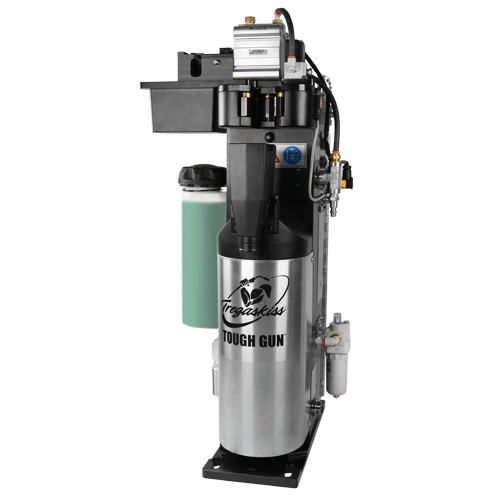
General selection considerations
Space and duty cycle factors
Nozzle maintenance
Storage and handling
Proper connections

and gas diffuser (as shown in this cutaway)
help ensure reliable electrical conductivity
and minimize heat. The result is more
consistent weld quality and longer-
lasting consumables.Quality of Consumables Can Play a Role in Welding Productivity, Costs
Quality of Consumables Can Play a Role in Welding Productivity, Costs?

This article has been published as a web-exclusive on thefabricator.com. To read the entire story by Bernard design engineer Rob Centner, please click here.
PRODUCT UPDATE – New Internal Stop in Centerfire and Quik Tip Diffusers
PRODUCT UPDATE –
New Internal Stop in Centerfire and Quik Tip Diffusers
What’s Changed?
Frequently Asked Questions


PRODUCT IMPROVEMENT – Tregaskiss Cutter Blades
PRODUCT IMPROVEMENT —
Tregaskiss Cutter Blades
Ordering Information
Part Number Cutter Blade Nozzle RCT-01 0.500″ (12.7 mm) Cutter 5/8″ (15.9 mm) Bore RCT-04 0.358″ (9.1 mm) Cutter 1/2″ (12.7 mm) Bore RCT-05 0.375″ (9.5 mm) Cutter 1/2″ (12.7 mm) Bore, TOUGH ACCESS™ RC-06 0.281″ (7.1 mm) Cutter 3/8″ Bore RC-08 0.438″ (11.1 mm) Cutter 5/8″ (15.9 mm) Bore, Binzel® RCT-10 0.406″ (10.3 mm) Cutter 5/8″ (15.8 mm) Bore, TOUGH ACCESS RCT-11 0.562″ (14.3 mm) Cutter 11/16″ (17.5 mm) Bore, Tandem RC-12 0.530″ (13.5 mm) Cutter 3/4″ (19.0 mm) Bore RCT-13 0.520″ (13.2 mm) Cutter 3/4″ (19.0 mm) Bore RCT-16 0.359″ (9.12 mm) Cutter 15.5 mm, Panasonic®, 350 amp RCT-17 0.359″ (9.12 mm) Cutter 16.0 mm, Panasonic, 500 amp RCT-18 0.500″ (12.7 mm) Cutter 15.5 mm Nozzle M10 Tip WH500T Torch, Binzel
NOTE: The TOUGH GARD spatter cleaner will be discontinued effective December 31, 2014Part Number Cutter I.D. Nozzle Bore C-500 0.350″ (8.9 mm) Cutter 0.500″ (12.7 mm) Bore C-625 0.500″ (12.7 mm) Cutter 0.625″ (15.9 mm) Bore C-PA001 0.359″ (9.12 mm) Cutter 15.5 mm, Panasonic, 350 amp C-PS002 0.359″ (9.12 mm) Cutter 16.0 mm, Panasonic, 500 amp C-Q001 0.359″ (9.12 mm) Cutter 9/16″ (14.3 mm) Bore, AWQ C-750W 0.520″ (13.2 mm) Cutter 0.750″ (19.0 mm) Bore, 600 amp Water-Cooled Preventive Robotic MIG Gun Maintenance: the Whos, Whens, Whys and Hows
Preventive Robotic MIG Gun Maintenance: the Whos, Whens, Whys and Hows

PM program basics: the whos and whens
Taking action: the whys and hows
Secure connections on a regular basis
Prevent spatter build-up
Mind the liner
Assess the welding cable and power pin
Parting thoughts on PM programs
From Technology to Technical Support: Welding in Today’s Automotive Industry
From Technology to Technical Support: Welding in Today’s Automotive Industry

What You Should Know About Shielding Gas
What You Should Know About Shielding Gas

The role of shielding gases
Selecting the right shielding gas
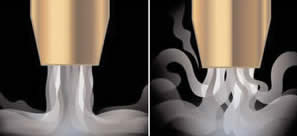
Tips for getting the most out of your shielding gas
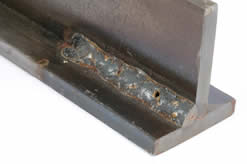
Emergency Vehicle Service Provider Gains Versatility, Comfort and More from New Welding MIG Guns
Emergency Vehicle Service Provider Gains Versatility, Comfort and More from New Welding MIG Guns

New guns offer greater versatility and comfort

The added benefits of new consumables

Keeping the customer happy is priority No. 1
PRODUCT IMPROVEMENT – New Swivel Design on the Bernard FILTAIR Fume Extraction Gun
PRODUCT IMPROVEMENT –
New Swivel Design on the Bernard FILTAIR Fume Extraction GunWhat Changed?
Frequently Asked Questions


PRODUCT IMPROVEMENT- Tregaskiss Automatic MIG Gun Series Handles
PRODUCT IMPROVEMENT —
Tregaskiss Automatic Series MIG Gun Handles

10 Money Saving Tips for Your Semi-Automatic MIG Guns
10 Money Saving Tips for Your Semi-Automatic MIG Guns
Tip No. 1: Protect Your Assets

Tip No. 2: Get a Neck Up
Tip No. 3: Inspect, Clean and Tighten Regularly
Tip No. 4: Trim It Properly
Tip No. 5: Line It Up
Tip No. 6: Lighten Up
Tip No. 7: Stay Connected
Tip No. 8: Keep It Smooth and Clean
Tip No. 9: Size It Right
Tip No. 10: Think Long Term
7 Things To Know About Robotic Welding Systems
7 Things To Know About Robotic Welding Systems
1. Part repeatability is critical to successful automation
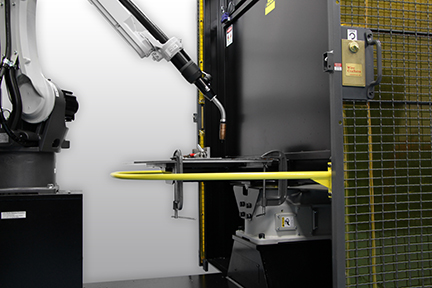
2. Training is essential
3. Additional safety equipment may be necessary

4. Weld data monitoring and/or peripherals can help improve results
Proper maintenance can help protect the investment in automation
6. Communication is key to proper weld quality and cost savings
7. Robots can do more than just weld
Preventive Maintenance Isn’t Just for Welding Robots
Preventive Maintenance Isn’t Just for Welding Robots
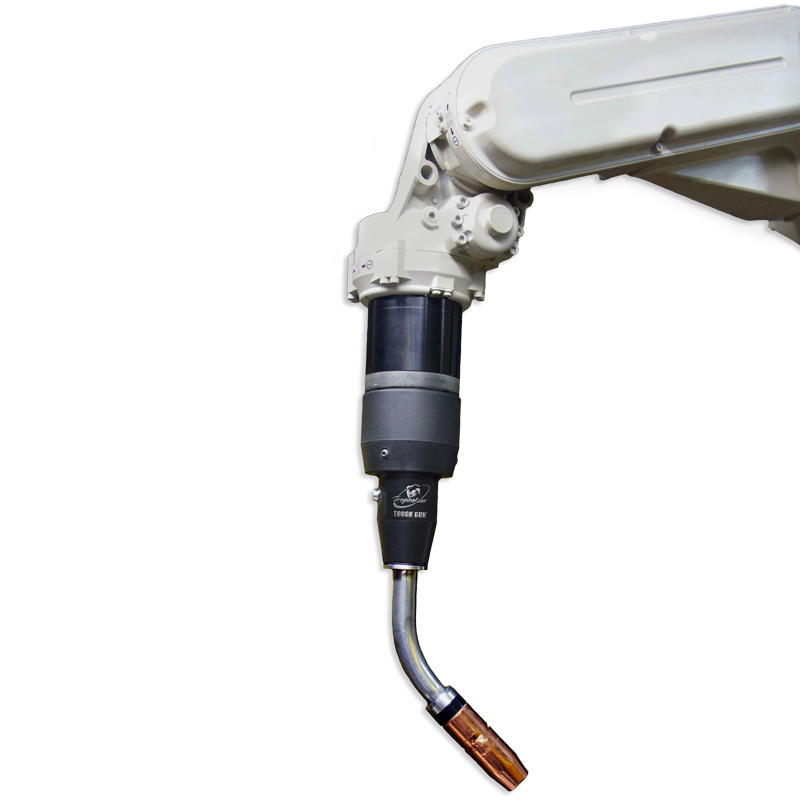
Preventive Maintenance Tasks
1. Check connections on a regular basis
2. Regularly inspect the welding cable and power pin
3. Look for spatter build-up.
4. Replace the liner ahead of failures.
The Frequency and Scope